

The longest day
poetic reflections on the solstice

The solstice has always felt bittersweet to me. Let me explain: I am a Leo (so I am naturally predisposed to worshipping summer) and I wait all year for the solstice.
But it also means, once the solstice finally appears, summer will end.
Everyone talks about the abundance of light and my much-loved longer days and poetic heat, but I keep thinking about what comes after. The sun reaches its apex and immediately begins its slow descent. Even at its brightest, there is an undercurrent of longing.
Perhaps this is why poets love summer (like me), because we understand that beauty is most intoxicating when it is fleeting.
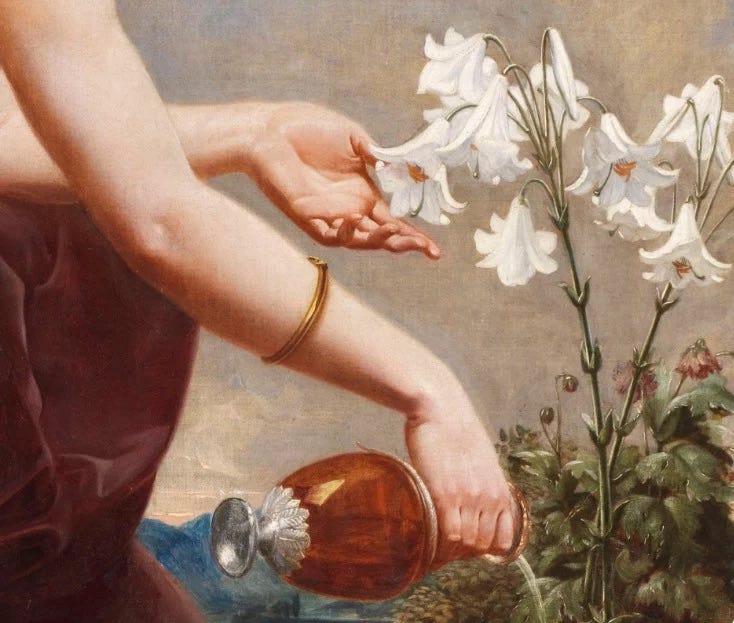
I think of long afternoons spent reading with the windows open, of cherries staining fingertips, of spontaneous gatherings, eating ice cream under the stars, shopping at outdoor markets, lazy days at the beach. I think of dresses hung over chairs after midnight, of coconut sunscreen-scented skin. I think of wanting something so intensely that I briefly become incandescent.
Anaïs Nin wrote, “I must be a mermaid, Rango. I have no fear of depths and a great fear of shallow living.”
I return to this line every summer because summer is deep and has an appetite. For pleasure and experience, for total and complete embodiment.
I’m ready to lock in. I’m ready to say yes and yes again to beauty before practicality can intervene.
And yet, beneath all this brightness, another truth persists. And it reminds me of that Mary Oliver line that sounds more like a prayer lately: “Tell me, what is it you plan to do with your one wild and precious life?”
Perhaps that’s the real question of the solstice. How can we let ourselves by altered by joy? How to live so fully that when the days begin to shorten, we carry summer inside us anyway?
Like a poem, or a secret. Like a mouth still sweet from fruit.
A reflection as exquisite as the topic.